
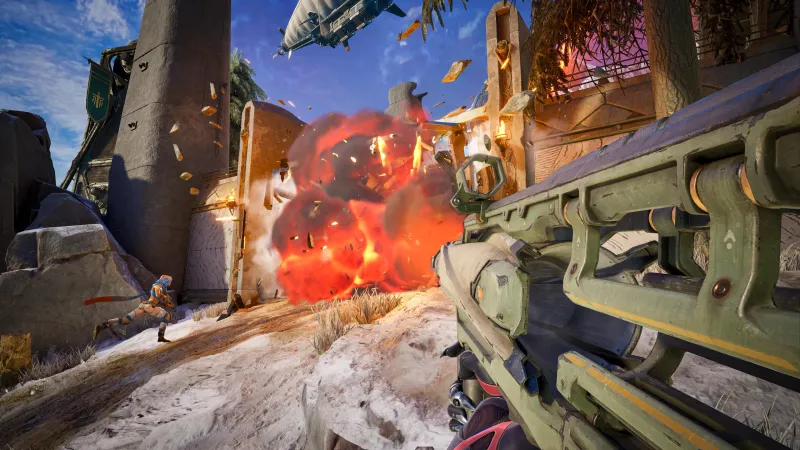
After a ceremonious reveal at the conclusion of The Game Awards 2026, newcomer developer Wildlight Entertainment launched its first-person raid shooter Highguard on PlayStation 5, Xbox Series X/S, and PC. Despite eclipsing 100,000 concurrent Steam players around the game’s launch, that number quickly dropped (though Steam concurrents are only a fraction of the total players), with Steam’s reviews status for the game sitting at “mixed” today.
As a result, Wildlight laid off most of its 100-person staff, roughly two weeks after the game’s launch, and according to a new report from Bloomberg, less than 20 developers remain at the studio – it’s those remaining employees that have pushed out two somewhat hefty patches for Highguard since the layoffs on February 11. That same Bloomberg report also details the game’s development, the weeks after its reveal at The Game Awards in December, and the subsequent Highguard fallout since launch last month.
Bloomberg reports that in 2021, a small group of people who worked at developer Respawn Entertainment, owned by EA, quit and started a new studio. After helping Respawn launch Apex Legends in 2019, some at the studio watched the battle royale bring in more than $3 billion in revenue over the next couple of years. However, some of the creatives felt slighted by how little of that $3 billion made its way to the developers behind it. Thus, the idea of starting a new studio, creating a successful surprise-launch live-service shooter, and sharing the profits among employees was born.
With Wildlight co-founder and CEO Dusty Welch touting the studio’s profit-sharing program, he was able to attract others to join the team and work on what was first a survival game like Rust before it was transformed into the raid shooter that Highguard launched last month, according to the report. Bloomberg writes that after the transition to a raid shooter, which retained some of the elements of the original Rust-esque prototype, testing began with staff, external players, and Tencent’s TiMi Studio Group; it was only recently revealed that China-based company Tencent helped fund Highguard by Stephen Totilo’s Game File on February 17.
Reception amongst those tests was positive, according to the 10 Highguard developers Bloomberg spoke to for its report, but some employees were apparently concerned that these tests weren’t accurate enough to a real play environment. Developers helped playtesters understand mechanics, in-game communication was encouraged, and more, but these gameplay aspects aren’t guaranteed when a game reaches players’ hands after launch. To get ahead of that, some employees suggested letting people play Highguard before launch, perhaps in a beta or open playtest, but leadership at Wildlight turned down that suggestion, Bloomberg reports.
The leadership at Wildlight wanted to announce the game and launch it a few weeks later, without letting the public play it beforehand, as those developers had seen work successfully with Respawn’s Apex Legends. As a result, Highguard was revealed, the reception soured quickly, and the game became a bit of a meme online before it even launched, with some comparing it to Concord, PlayStation’s own live-service shooter that shut down two weeks after launch.
Bloomberg reports that the employees it spoke to said Wildlight was a “healthy, collaborative, transparent” environment they loved working in… until the final two months, when morale tanked following the game’s subsequent reception after The Game Awards reveal. Then, the game launched on January 26 and did little to impress both critics and players alike – Game Informer gave it a 7.5 in its review.
Despite a strong initial showing, playercounts dropped, and two weeks after launch, Wildlight laid off most of its staff. With Highguard being a free-to-play title, its avenue for revenue is highly dependent on retaining players and getting them to spend money on in-game cosmetics, mounts, and more. Today, Highguard is still live and receiving updates, though it remains unclear how long it can live with so little staff, comparatively, working on the game.
For more details, be sure to read the full Bloomberg report here.
Have you played Highguard? Let us know what you think of it in the comments below!